
Indian carmakers, including Maruti Suzuki and Kia India, reported robust sales growth in May 2026, with both companies achieving their highest-ever monthly sales despite rising fuel prices. Maruti Suzuki's domestic sales surged to 1,93,535 units, while Kia India recorded 27,586 units, driven by strong demand in mini and compact segments and a shift towards electric and CNG vehicles.

India's domestic passenger vehicle sales experienced a robust 24.6 per cent year-on-year increase in June, propelled by favourable government policies like income tax relief and repo rate cuts, alongside resilient rural demand, even as global crude oil prices pose potential cost pressures.

Tata Motors emerged as the biggest gainer in the passenger vehicles (PV) market in the second half of FY25, following a GST rate cut in September, achieving the highest growth among major OEMs and overtaking Mahindra & Mahindra in volumes.

The only other company working on hydrogen cars in India is Toyota Kirloskar Motor.

Passenger vehicle sales in India kicked off on a flat note in new fiscal 2024-25 with 3.38 lakh units sold in April, impacted by high base effect and muted demand due to the ongoing general elections. Dispatches of passenger vehicles from manufacturers to dealers were at 338,341 units in April 2024 as compared to 332,468 units in the same month last year, a growth of 1.77 per cent with major players Maruti Suzuki India, Hyundai and Tata Motors reporting marginal growth in their domestic wholesales.

The company further said once the situation was brought to its attention, it made the distributor acutely aware of the "inappropriateness of the action".

At the upper end of that range, the bourse would rank among the seven most valuable listed firms in the country.

VinFast has gone from an unknown brand to India's fifth-largest EV carmaker in just seven months, but its toughest battle is only beginning.

Hyundai Motor India and Honda Cars India on Wednesday joined the list of automakers planning to hike prices of vehicles from April, second time this year, to partially offset the impact of rising input costs and higher operational expenses. In a statement Hyundai Motor India Ltd (HMIL) said it will hike prices of its vehicles by up to 3 per cent effective in April 2025.

Leading automakers Maruti Suzuki, Tata Motors, Mahindra & Mahindra, and Hyundai Motor India posted higher sales in January riding on the growth momentum ushered in by the GST reforms in the festive period last year.

India's passenger vehicle industry is poised for a record-breaking year in 2026, propelled by robust dispatches in the first half of the calendar year and strong demand for utility vehicles, despite facing several economic challenges.
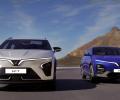
New players like Maruti Suzuki, VinFast, and Tesla are significantly expanding India's electric passenger vehicle (e-PV) market, capturing an 8.1 per cent share and contributing 18 per cent of incremental registrations in the first half of 2026, according to Fada Research data.
Auto majors Maruti Suzuki India and Hyundai reported muted sales performance in October as the companies curtailed dispatches to dealers in order to cut inventory build up.

India's leading passenger vehicle manufacturers are significantly increasing investments and factory capacities, alongside planning major product launches for FY27, driven by strong confidence in sustained domestic demand growth despite global geopolitical tensions and supply chain risks.
Passenger vehicle sales in India reached a record high of 4.7 million units in FY26, boosted by strong performances from major automakers and the implementation of GST 2.0.

IPO bound HMIL, which is also from South Korea, had faced severe labour unrest for nearly a decade till the realisation -- a worker's union cannot be avoided -- dawned on it.

Electric passenger vehicle (PV) retail sales jumped more than twofold in September with Tata Motors (TaMo) leading the pack having over 6,000 registrations and a 40 per cent market share.

The charging infrastructure expansion includes the setup of over 600 DC charging stations by 2030 (including company-owned and company-operated ones) in addition to partnerships with over 10,200 charging points, collaborating with operators like Shell, Charge Zone, and Statiq.

Maruti Suzuki and Hyundai Motor India on Monday reported a dip in passenger vehicle dispatches to dealers in the domestic market last month as the companies tried to adjust vehicle inventory amid slowing demand. Maruti Suzuki India said it "calibrated supplies" to the dealers, aligning with the industry's retail sales projections amid India-Pakistan conflict and a dip in sales of entry-level cars.

South Korean auto giant Hyundai Motor Company is considering tax implications of listing its Indian unit before taking a final call, according to sources privy to the development. Hyundai Motor is mulling an initial public offering (IPO) for its Indian arm to raise around $3 billion (at a valuation of up to $30 billion), and talks are in the early stages between the company and bankers, banking sources revealed. Hyundai Motor India Ltd (HMIL), however, declined to comment on the development.

Currently Hyundai sources only a negligible percentage of components from India for its global needs but wants to increase the level.

Hyundai aims to raise exports to 30% of output by FY30 as domestic sales slow; six EVs among 26 product launches planned as part of long-term growth strategy.
Hyundai may join the battle in the sub-compact car market in India after Tata Motors introduces its Rs 100,000 car.

India's second-largest passenger vehicles firm will be valued at Rs 1.59 trillion at the top-end of the price band of Rs 1,865-Rs 1,960.

India's electric vehicle (EV) markets expanded gains in January compared to the year-ago period, as two-wheeler and passenger vehicle sales triggered a shuffle in the competitive landscape, data from an automobile dealers' association showed.

Leading passenger vehicle maker Maruti Suzuki on Saturday reported marginal growth while Hyundai and Tata Motors posted a decline in their sales in February as a slowdown in the market continued with demand remaining muted. On the other hand, Mahindra & Mahindra and Toyota Kirloskar Motor posted double-digit growth riding on their SUV and MPV models.

Under FAME-II, automakers provided subsidies to electric vehicle (EV) customers at the time of purchase, with the understanding that the government would reimburse the firms later.

Hyundai Motor India Ltd introduced on Wednesday its new compact car, 'i10' priced between Rs 3,39,000 lakh and Rs 3,98,000.

Hyundai Motor India expects SUV sales to account for 65 per cent of its overall volumes in 2024, while it gears up to enter the EV segment early next year, aiming to garner 20 per cent of its total sales by 2030, its COO Tarun Garg said on Tuesday. The automaker, which got around 60 per cent of its overall volumes from sports utility vehicle (SUV) sales last year, plans to invest Rs 7,000 crore on its second plant at Talegaon, according to Maharashtra Deputy Chief Minister Devendra Fadnavis. The company officials however declined to comment on the matter.

Leading carmakers Maruti Suzuki and Hyundai on Thursday reported a dip in wholesales in July as companies reduced vehicle dispatches to dealers amid moderation in demand. Maruti Suzuki India said its total domestic passenger vehicle sales stood at 137,463 units in July against 152,126 units in the year-ago month, down 9.64 per cent.

Amid challenging market environment, Maruti Suzuki India and Mahindra & Mahindra reported an increase in vehicle dispatches to dealers last month while Tata Motors and Hyundai saw a year-on-year drop in sales.
The operating performance of the country's largest passenger carmakers, Maruti Suzuki India (MSIL) and Hyundai Motor India (HMIL), in the July-September quarter (Q2) of 2025-26 (FY26) outpaced brokerage expectations.

Hyundai Motor India on Thursday said it will invest Rs 20,000 crore in a phased manner in Tamil Nadu over the next ten years to make further inroads into electric vehicles and modernisation of vehicle platforms. The automaker will invest in phases starting in 2023 till 2032. "Hyundai has been one of the largest manufacturers and consistent investors in Tamil Nadu.

Last year it had entered Spain, China, Vietnam and Pakistan as well.
Hyundai Motor India Limited, a wholly owned subsidiary of Hyundai Motor Company S Korea, is investing an additional $220 million to expand the capacity of company's Chennai plant, a top company official said on Friday.
Hyundai Motor India, a wholly owned subsidiary of Korean Hyundai Motor Company, on Thursday reported a 28 per cent increase in sales for the month of January at 20,911 units.

Between April and August this financial year, passenger car exports rose 8.5 per cent year-on-year (Y-o-Y), while domestic sales fell by 8.5 per cent.

Maruti Suzuki India, Mahindra & Mahindra, Hyundai Motor and luxury car maker Audi have extended support to customers in cyclone and flood affected regions of Tamil Nadu and Andhra Pradesh. In a statement, Maruti Suzuki India said it has collaborated with its dealer partners and made several arrangements at its workshops. As soon as the news about the cyclone 'Michaung' was reported, the company proactively sent out 7 lakh SMS alerts containing precautionary steps to its customers to ensure that even before the cyclone hits, customers could take precautionary measures to safeguard their cars against potential damage, it said in a statement.
